
Two Things We Cannot Know
While most of us would admit there’s plenty we don’t know, there are a couple things we often think we know, but we simply don’t. I’m referring specifically to these two things: what other people are thinking/feeling and the future. Probably sounds obvious, right? You might be thinking:
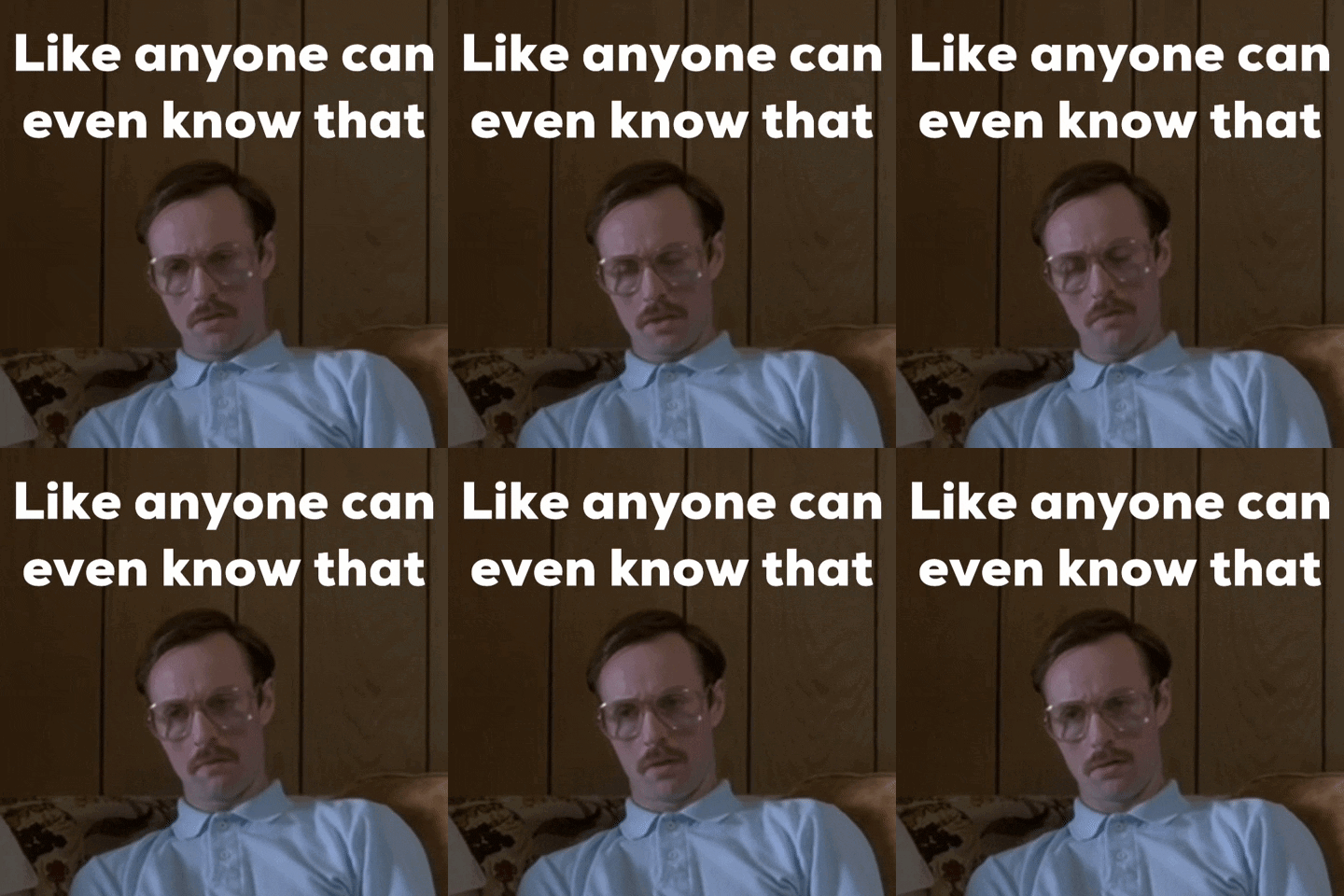
But I’ll show you how we often act as if we do know these things in everyday conversation.
When it comes to what others are thinking or feeling, unless you have the gift of telepathy — and I’m contending you don’t — the best you can do is read clues and guess what’s going on in their head. Now, sometimes, you might have several clues on which to base your now very educated guess, and the whole thing makes sense. The other person was wronged so they seem upset - that sounds like a safe bet. But particularly when there’s any amount of confusion (i.e., “Why are they reacting this way? Why do they seem so upset when what I did/said wasn’t that bad?”), your best move will be to ask how they’re feeling or ask if your guess as to how they’re feeling is correct, and then ask why. There’s a good chance there’s some kind of explanation that will help you proceed in a more helpful way. You will avoid very easy misunderstandings or wrong moves that only make things worse. Cues like tone and body language are merely hints as to what they might be thinking or feeling, so don’t be too certain.
The other thing you cannot know is the future, assuming you don’t have a crystal ball, of course. A common example of us doing this is when someone else says something and we react with, “See, I knew you were gonna say that!” I contend that no, you didn’t know they were going to say that. Rather, you drew on past experiences to guess, or predict, that they were going to say that, and you happened to be right. But what’s the difference? What’s the distinction between knowing what someone will do and guessing correctly? The difference is, once again, certainty.
Now, I not only think it’s okay to predict the future; I think it’s smart to predict the future. Our lives would be so inefficient if we never used the past to guess what will happen moving forward. But when we approach this with certainty, we don’t leave room for other outcomes. When it comes to human behavior, what we might do is put the other person in a box without room to change, which is especially unfortunate if they’re actively trying to change. We thus don’t give them a chance to do things better because of our misplaced certainty. For example, in a conversation I might notice the perfect opportunity to use a timeout, but if I’ve tried doing so in the past and my partner didn’t accept it, I might confidently think, “Well, a timeout won’t work here because they’ll just shoot it down like they did before,” and now maybe I don’t save the deteriorating situation because of an assumption I’m making. Meanwhile, my partner might be trying to grow and is waiting for me to call a timeout, and since I’m not, they’re thinking, “Well, I guess they don’t need a pause, cause they’re not calling it.” If there’s any reason to think our partner might surprise us with new, better behaviors, it’s important that we give them the chance by not being so certain about the future.
Hopefully this helps you be more intentional about what you do and don’t know so that you can avoid common communication mistakes. One of the most common obstacles to good communication is unknowingly misinterpreting what others do or say without questioning it. It’s more common than you might think. Learn how to be more careful in your conversations and employ more tools to lead to more understanding by doing some couples counseling with your partner. These tools, as helpful as they are on paper, work best when they can be adapted to your specific circumstances.